

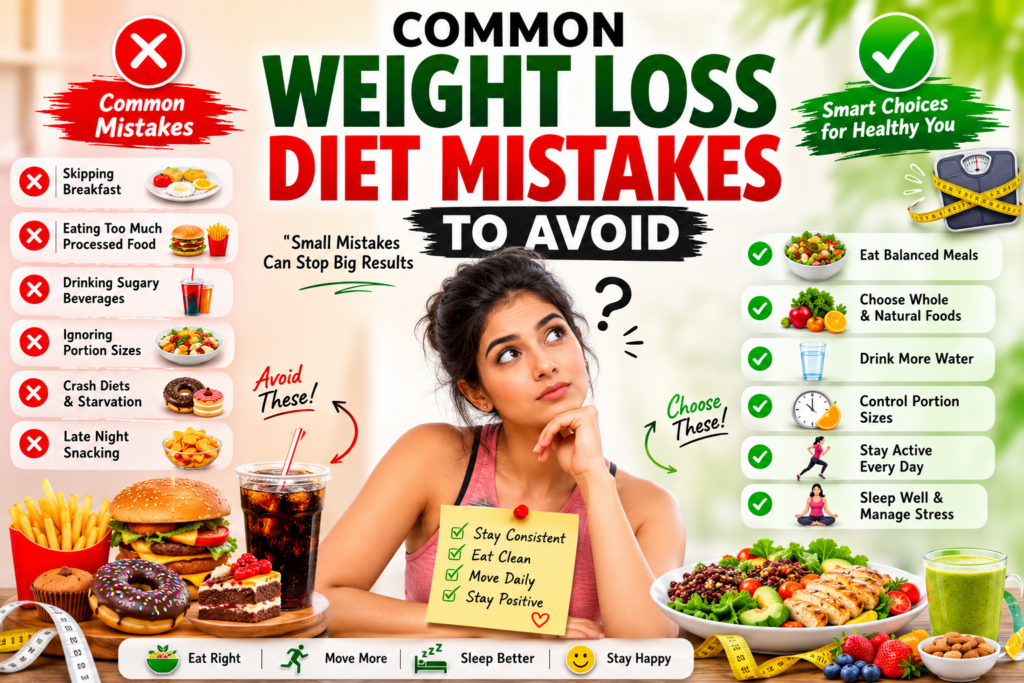
Losing weight is not just about eating less—it’s about eating smart. Many people start a diet with enthusiasm but unknowingly make mistakes that slow their progress. Understanding these common errors can help you achieve healthy and sustainable weight loss.
1. Skipping Breakfast
Many people believe skipping breakfast reduces calorie intake. In reality, it often leads to excessive hunger later in the day, increasing the chances of overeating.
2. Following Crash Diets
Extremely low-calorie diets may produce quick results, but they are difficult to maintain and often lead to weight regain. A balanced eating plan is more effective for long-term success.
3. Not Eating Enough Protein
Protein helps preserve muscle, keeps you feeling full, and supports metabolism. Include foods like eggs, lentils, beans, fish, chicken, tofu, or Greek yogurt in your meals.
4. Drinking Sugary Beverages
Soft drinks, packaged juices, and sweetened coffee can add hundreds of hidden calories. Choose water, unsweetened tea, or fresh lemon water instead.
5. Ignoring Portion Sizes
Even healthy foods can contribute to weight gain when eaten in large quantities. Using smaller plates and measuring portions can help prevent overeating.
6. Eating Too Many Processed Foods
Packaged snacks, chips, cookies, and fast food are often high in unhealthy fats, sugar, and sodium. Replace them with fruits, nuts, roasted chickpeas, or homemade snacks.
7. Not Drinking Enough Water
Sometimes thirst is mistaken for hunger. Drinking enough water throughout the day can improve digestion and help control unnecessary snacking.
8. Eating Too Quickly
Your brain takes around 20 minutes to recognize fullness. Eating slowly helps you enjoy your meal and prevents overeating.
9. Cutting Out Healthy Fats
Healthy fats from nuts, seeds, avocados, and olive oil support heart health and keep you satisfied. Avoiding all fats is unnecessary.
10. Depending Only on Exercise
Exercise is important, but poor eating habits can easily outweigh the calories burned during workouts. Nutrition and physical activity work best together.
11. Skipping Meals
Missing meals often causes intense hunger later, leading to larger portions or unhealthy food choices. Eat regular, balanced meals.
12. Eating Late at Night
Frequent late-night snacking can increase calorie intake, especially when choosing high-sugar or high-fat foods.
13. Not Reading Nutrition Labels
Many products marketed as “healthy” contain added sugar, excess sodium, or unhealthy fats. Always check the nutrition facts before buying.
14. Avoiding Carbohydrates Completely
Whole grains, oats, brown rice, and fruits provide energy and fiber. Focus on healthy carbohydrates instead of eliminating them entirely.
15. Choosing Low-Fat Products Without Checking Sugar
Many low-fat products compensate for reduced fat by adding extra sugar. Compare nutrition labels before purchasing.
16. Emotional Eating
Stress, boredom, and sadness often trigger unnecessary eating. Find healthier coping methods such as walking, reading, or talking to a friend.
17. Sleeping Too Little
Poor sleep affects hunger hormones and increases cravings for high-calorie foods. Aim for 7–9 hours of quality sleep every night.
18. Setting Unrealistic Goals
Healthy weight loss usually occurs gradually. Small, consistent improvements are more sustainable than rapid changes.
19. Eating While Watching TV or Using a Phone
Distracted eating often results in consuming more food without realizing it. Focus on your meal to better recognize fullness.
20. Ignoring Fiber Intake
Fiber promotes fullness, improves digestion, and supports weight management. Include vegetables, fruits, legumes, and whole grains daily.
21. Snacking Without Planning
Keep healthy snacks available, such as fruit, yogurt, roasted nuts, or vegetable sticks, to avoid unhealthy choices.
22. Rewarding Yourself with Junk Food
Celebrating weight-loss milestones with high-calorie treats can undo progress. Choose non-food rewards instead.
23. Not Tracking Progress
Recording meals, body measurements, or weekly weight can help identify patterns and keep you motivated.
24. Believing Every Diet Trend
Social media often promotes unrealistic or unproven diets. Choose evidence-based nutrition habits instead of following every trend.
25. Expecting Instant Results
Healthy weight loss takes time. Patience and consistency produce better long-term outcomes than quick fixes.
Healthy Weight Loss Tips
- Eat balanced meals with protein, fiber, and healthy fats.
- Drink plenty of water throughout the day.
- Exercise regularly with a mix of cardio and strength training.
- Get enough sleep every night.
- Reduce processed foods and sugary drinks.
- Practice mindful eating.
- Plan meals in advance.
- Stay physically active throughout the day.
- Monitor your progress without obsessing over the scale.
- Stay consistent rather than aiming for perfection.
Final Thoughts
Successful weight loss is built on healthy habits, not extreme restrictions. Avoiding common diet mistakes can make your journey easier, healthier, and more sustainable. Focus on balanced nutrition, regular physical activity, adequate sleep, and realistic goals. Remember that lasting results come from consistency, not perfection. Every healthy choice you make today brings you one step closer to a healthier future.